Rokeby Museum
2027 Virtual Winter Book Discussion Group
January 19, 2027 @ 6:00 pm – 7:00 pm
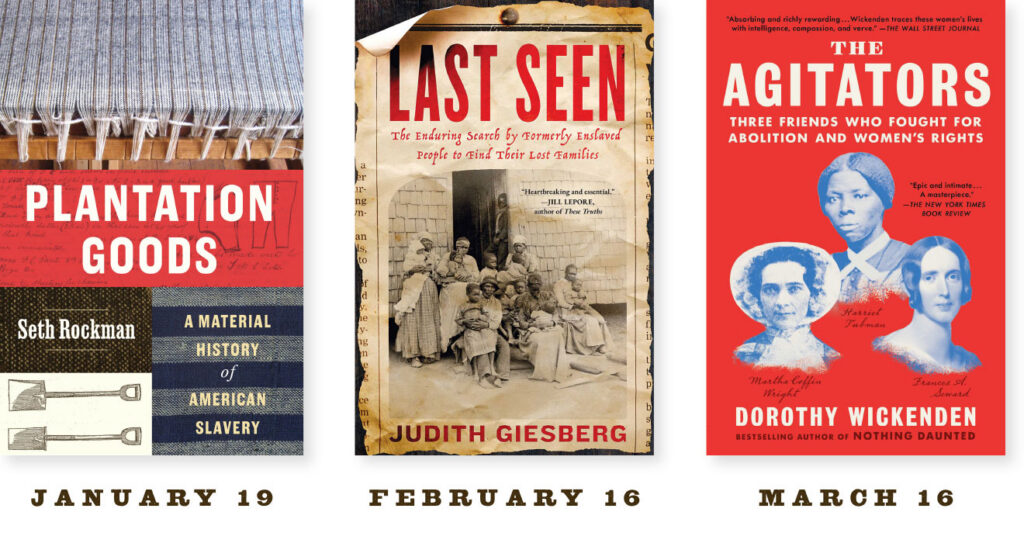
Our Winter Book Discussion Group is back again for 2027. Join us each month, January–March for FREE virtual discussions about three powerful books. All discussions will be held via ZOOM. Registration in advance is required. Attendance at all three discussions is not required to register.
Tuesday, January 19, 2027, 6:00 pm–7:00 pm
Plantation Goods: A Material History of American Slavery, by Seth Rockman
In Plantation Goods: A Material History of Slavery, Seth Rockman examines slavery through the everyday objects, commodities, and systems that sustained plantation economies. Rather than treating slavery solely as a political or social institution, Rockman follows the stories of material objects, such as shoes made by Massachusetts farm women that found their way to the feet of an enslaved Mississippi man, to reveal a national economy organized by slavery—a slavery that outsourced the production of its supplies to the North, and a North that outsourced its slavery to the South. The industrializing North and the agricultural South is how we have been taught to think about the United States in the early nineteenth century. But in doing so, we overlook the economic ties that held the nation together before the Civil War. We miss slavery’s long reach into small New England communities, just as we fail to see the role of Northern manufacturing in shaping the terrain of human bondage in the South. Using plantation goods—the shirts, hats, hoes, shovels, shoes, axes, and whips made in the North for use in the South—Seth Rockman tells important stories in American history in the everyday objects that stitched together the lives and livelihoods of Americans—white and Black, male and female, enslaved and free—across an expanding nation.
Tuesday, February 16, 2027, 6:00 pm–7:00 pm
Last Seen: The Enduring Search by Formerly Enslaved People to Find Their Lost Families, by Judith Giesberg
When slavery ended in 1865, emancipation did not restore the families that had been torn apart. “Information Wanted” advertisements and letters to the editors of newspapers both read and heard from pastors in churches reading to those who could not read, were used by separated families to attempt to find their loved ones. Last Seen tells the story of the cruelest horror of slavery—the forced breakup of families and the determination and resilience of the formerly enslaved. Giesberg draws on the nearly 5000 letters and advertisements she found to compile the stories of the people who placed the ads, the loved ones they tried to find, and the outcome of their quests to reunite.
Tuesday, March 16, 2027, 6:00 pm–7:00 pm
The Agitators: Three Friends who Fought for Abolition and Women’s Rights, by Dorothy Wickenden
Harriet Tubman, Martha Coffin Wright, and Frances A. Seward are the protagonists in this look at the fight for emancipation and women’s rights. Harriet Tubman, formerly enslaved, was instrumental in shepherding hundreds of Freedom Seekers to safety. Martha Coffin Wright, a Quaker mother of 7, helped organize anti-slavery conventions across New York state, braving mobs and hecklers wherever she spoke. Although Frances Seward, wife of William H. Seward, President Lincoln’s Secretary of State, hid her radicalism in public, she influenced her husband, pressing him to persuade Lincoln to move more quickly on emancipation. This book explores more than 40 years of the most turbulent period in American history through the eyes of these women.
Registration for virtual book discussions is FREE. When you register, you will receive a ZOOM link email a few days before each discussion. Attendance at all three discussions is not required to register.